General Surgery: da Vinci 5 Robotic-Assisted Surgery
Skip physician searchFind a Provider
1 Criteria Search
Robot-Assisted Surgery in Iowa with the da Vinci 5 System
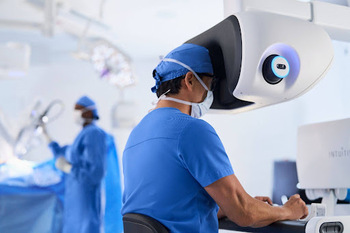 Iowa Specialty Hospitals & Clinics uses advanced surgical technology to help patients receive high-quality care close to home. The da Vinci 5 (R) is a high-tech medical robot controlled by specially trained surgeons. Surgeons control the robot using precise handheld controls during minimally invasive procedures with advanced vision, precision, and control.
The robot does not perform surgery on its own. Your surgeon controls every movement throughout the procedure. For some patients, robotic-assisted surgery may offer benefits such as smaller incisions, less pain, less scarring, a shorter hospital stay, and a faster recovery.
The da Vinci 5 gives our surgical team another option for performing certain minimally invasive procedures while keeping your surgeon in control of your care.
What Is the da Vinci 5 Surgical System?
The da Vinci surgical system is an advanced robotic-assisted surgical technology designed to help surgeons perform minimally invasive procedures with greater precision and control.
Despite the term robotic surgery, the robot does not make decisions or operate autonomously. Your surgeon sits at a console in the operating room and controls the system throughout the procedure.
The system translates the surgeon's hand movements into precise movements of small surgical instruments inside the body.
Think of it like power steering in a car. The technology can make movements smoother and more precise, but the surgeon remains in control.
How Does the da Vinci Robot Work?
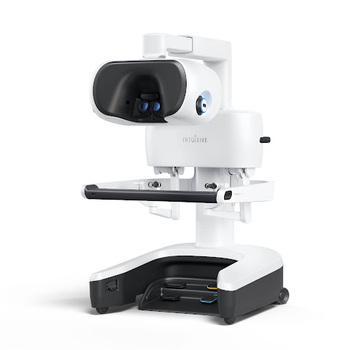 The da Vinci system has three main parts:
- Surgeon console: Your surgeon sits at the console and controls the camera and surgical instruments.
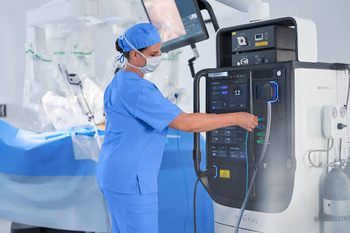
- Patient cart: This unit is positioned next to the operating table and holds the camera and instruments used during surgery.
- Vision system: This allows the surgical team to view the procedure and helps connect the system's components.
During surgery, your surgeon views the surgical area through a highly magnified, three-dimensional image. Small instruments placed through tiny incisions can bend and rotate with a wide range of motion.
The da Vinci 5 also includes technology designed to help surgeons better understand how much force they apply to tissue during certain procedures.
What Are the Potential Benefits of Robotic Surgery?
Robotic-assisted surgery is a form of minimally invasive surgery. Instead of making one large incision, the surgeon can often complete the procedure through several much smaller openings.
Depending on the procedure and your individual health, potential benefits may include:
- Smaller incisions
- Less blood loss
- Less damage to surrounding tissue
- Less pain after surgery
- Less visible scarring
- Lower risk of some wound complications
- Shorter hospital stays
- Faster return to normal activities
These benefits are not guaranteed. Your results depend on factors such as your health, the condition being treated, the type of procedure, and your surgeon's experience.
Open vs. Laparoscopic vs. Robotic-Assisted Surgery
Different surgical approaches can be appropriate for different patients. Your surgeon will recommend an approach based on your diagnosis, health, anatomy, and treatment goals.
| Open Surgery | Laparoscopic Surgery | da Vinci Robotic-Assisted Surgery | |
|---|---|---|---|
| Incisions | Usually one larger incision | Several small incisions | Several small incisions |
| How the surgeon operates | Uses handheld instruments directly | Uses long handheld instruments | Controls robotic instruments from a console |
| View of surgical area | Direct view | Magnified camera view | Magnified 3D view |
| Instrument movement | Based on natural hand movement | More limited range of motion | Wristed instruments that offer a wider range of motion |
| Who controls the procedure? | Surgeon | Surgeon | Surgeon |
| Recovery | May take longer for some procedures | Often faster than open surgery | Often faster than open surgery |
No one approach is best for every patient. In some cases, open or laparoscopic surgery may still be the safest or most effective choice.
What Procedures Can Use the da Vinci System?
Da Vinci systems can support minimally invasive procedures in several areas of medicine, including:
- General surgery
- Gynecologic surgery
- Urologic surgery
- Colorectal surgery
Procedures performed with robotic assistance may include certain hernia repairs, gallbladder procedures, hysterectomies, colorectal procedures, and urologic surgeries.
The availability of robot-assisted surgery depends on the procedure, your surgeon, and your individual needs. Talk with your surgeon to learn if the da Vinci 5 may be used for your specific surgery.
What Happens During da Vinci Robot-Assisted Surgery?
 Your exact experience will depend on the procedure, but robot-assisted surgery generally follows these steps:
- Your surgical team prepares you for surgery. You will meet with your care team and have an opportunity to ask questions.
- You receive anesthesia. Most da Vinci procedures require general anesthesia, so you remain asleep during surgery.
- Your surgeon makes small incisions. The number and location depend on your procedure.
- The surgical instruments are positioned. The surgical team connects the instruments to the da Vinci system.
- Your surgeon controls the procedure. Your surgeon sits at the console in the operating room and guides each movement.
- Your surgeon completes the procedure and closes the incisions.
- You begin recovery. Your care team monitors you as you wake from anesthesia and prepares you for the next stage of recovery.
Your surgeon remains responsible for your procedure throughout the entire operation.
What Is Recovery Like After Robotic Surgery?
Recovery varies based on the type of surgery and your overall health.
Because robotic surgery procedures often use smaller incisions than open surgery, some patients may experience less pain and return to normal activities sooner. However, even minimally invasive surgery requires time to heal.
Your surgical team will give you specific instructions about:
- Activity and lifting restrictions
- Incision care
- Pain management
- Driving
- Returning to work
- Diet
- Medications
- Follow-up appointments
Follow these instructions carefully, and contact your care team with any questions during recovery.
Is Robotic-Assisted Surgery Safe?
All surgery involves risks. Robotic-assisted surgery can still involve complications such as bleeding, infection, reactions to anesthesia, or injury to surrounding tissue or organs.
In some cases, the surgeon may need to change the planned surgical approach during the procedure. This could include converting a robotic-assisted procedure to laparoscopic or open surgery.
Your surgeon will review the expected benefits, possible risks, and other treatment options with you before surgery.
Advanced Surgical Care Close to Home
Iowa Specialty Hospitals & Clinics brings together experienced surgical teams and advanced technology to provide patient-centered inpatient and outpatient surgical care.
If surgery is part of your treatment plan, our team can help you understand your options and what to expect before, during, and after your procedure.
Find a Surgical Services Provider
View Surgical Services Locations & Hours
This purchase was supported by the Centers for Medicare & Medicaid Services (CMS) of the U.S. Department of Health and Human Services (HHS) as part of a financial assistance award totaling $209,040,063.71 with 100 percent funded by CMS/HHS. The contents are those of the author and do not necessarily represent the official views of, nor an endorsement by, the Iowa Department of Health and Human Services, CMS/HHS, or the U.S. Government.